Superman quit his day job last October. In protest to the “state of modern journalism”, Clark Kent has decided to hang up his press pass at the Daily Planet (Huges par 1). I am all for career changes even of fictional characters – the man has been working there since the early 1950s, so why not a change? However, in his exit speech Mr. Kent did say something that continues to nag at me – he states, “Times are changing and print is a dying medium.”
As many in the print industry will tell you times are changing but print is certainly not a dying medium. In January 2012, a white paper by InfoTrends predicts a steady increase in the print industry into 2015, with the most growth to be seen in packaging (O’Malley par 3). Let’s also not forget the growing popularity and applications of textile print either – I encourage you to read my previous post, Revolutionary Textiles.
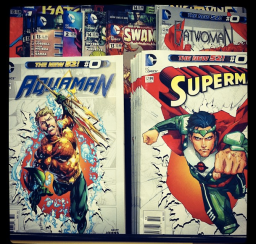 For those who still are not convinced, take this real world example. When working at my job as a marketing strategist, almost every client meeting I had began with someone telling me – “ I want an all digital campaign” and ended with them ordering a printed piece. Looks like that print is still sticking around. Even the mighty Mr. Kent is having a hard time shedding himself of it – since as you can see from the image he is still sold in print, in Barnes and Nobles, at a newsstand. Kind of ironic isn’t it? I guess I should support his new ventures as an online blogger and download his latest comic to my iPad for half the price.
Hughes, Mark. “Superman quits The Daily Planet – over the state of journalism – Telegraph.” Telegraph.co.uk – Telegraph online, Daily Telegraph, Sunday Telegraph – Telegraph. N.p., n.d. Web. 28 Nov. 2012.
O’Malley, Donna. “Printing Industry Stabilizes Amidst Modest Economic Growth and Technological Advancements.” Welcome to InfoTrends Inc.. N.p., n.d. Web. 28 Nov. 2012.






 Arianna Valentini