
Pinterest Users = Shoppers

People all over America have been “jamming out” over one of America’s oldest licensed brands – Ball Home Canning – Mason jars. The brand, owned by Jarden Home Brands, has a 96% brand awareness but has struggled in the past to get consumers to try their product. That was until two years ago when the Mason jar had renaissance, all thanks to social media and one key player – Pinterest. Within one year of establishing its presence on Pinterest, Ball’s fans approached over 4,000 and had boards dedicated to the many uses of the Mason jar including – chandeliers, terrariums and soap dispensers. What was the Pinterest activities result? According to a recent article in Ad Age a 20% increase in sales for 2012 and one of the best sales years on record.
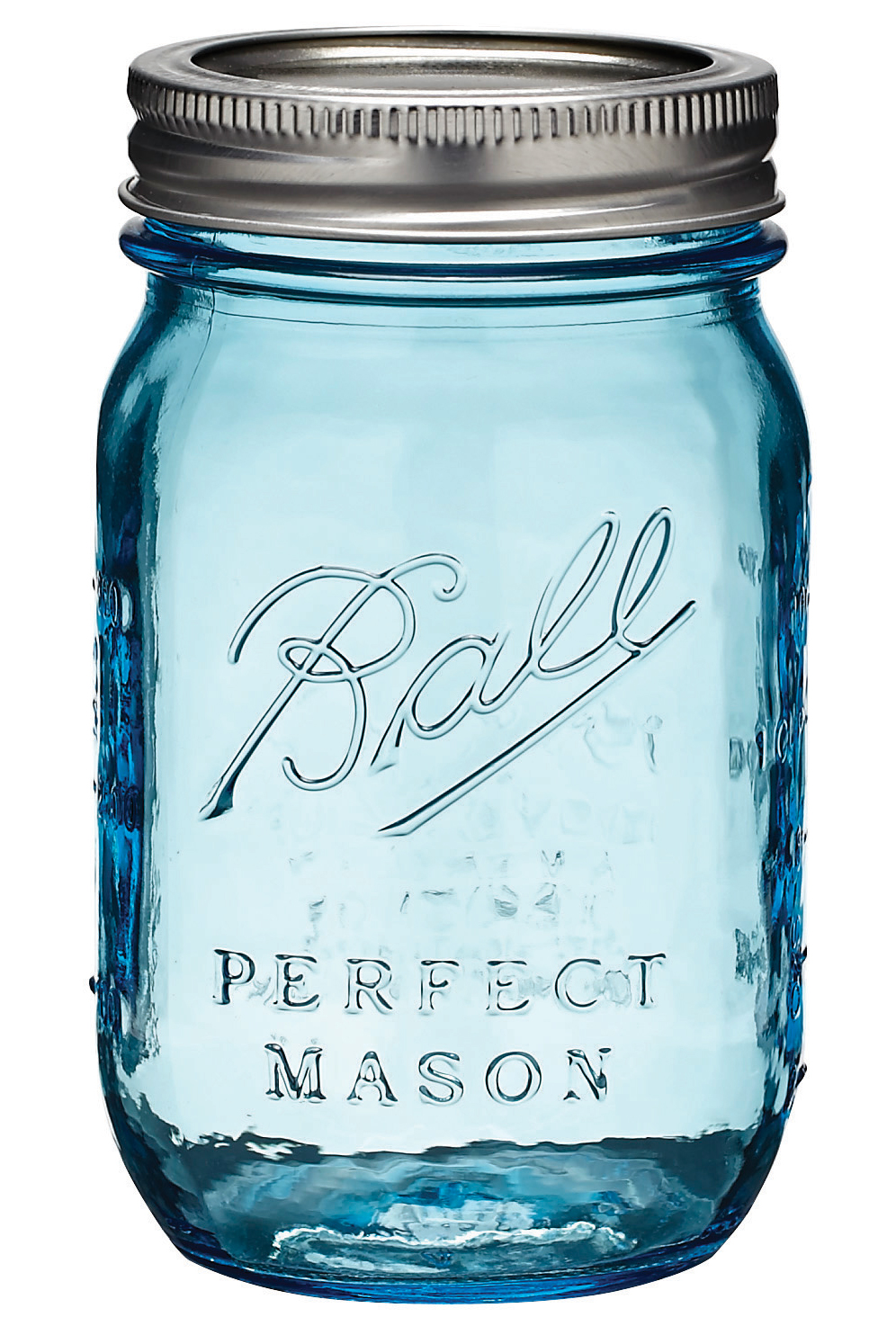
Image via AdAge.com
Image via AdAge.com

While Pinterest does not have ecommerce capabilities yet – it remains a major social media sales driver. In a recent article on Mashable.com, Waiyfair, a home goods company active in Pinterest, found that those shoppers referred to their site were 10% more likely to make a purchase than those who were referred by Facebook or Twitter. Waiyfair did not include non-social users – those who browse but do not have an account or pin. On average it was found that those social/non-social users referred by Pinterest spent 70% more than those who were not.

So how do businesses use Pinterest to their advantage? The first step is to pin! Many successful brands on Pinterest don’t just pin their own items but create inspiration boards for customers allowing them to more fully engage in the Pinterest community. A great example of this is a recent marketing campaign by Kotex, in which they took 50 women that inspired them on Pinterest and created items on their Pinterest board. The women were then sent packages filled with their wish list or pinned items and Kotex branded products, when they received their packages the women then pinned images of the packages. As a result Kotex was able to get 2,284 interactions and 694,853 impressions due to the active users of Pinterest.

So get pinning, find your customers and building your brand!!

Goodbye Facebook

Today, I woke up and did my usual morning routine. Roll out of bed, feed cat, roll back into bed, grab smart phone, and check Facebook. Except for today when I logged onto Facebook I had sudden realization – Facebook is not for me. I’m tired of getting ads because somehow Facebook’s back end has determined what I like or the constant changing of UI without any user testing or choice. And as it turns out I am not the only one feeling the Facebook fatigue.f_logo

According to a “recent Pew Research Center project found that 42 per cent of young adults between 18 and 29 reported spending less time on Facebook in a typical day last year than in 2011. Their age group was also the most likely to anticipate decreased use this year” (Mills par 7). Facebook is a company built on this demographic – what happens now when it’s core set of users is depleting? Is Facebook the next MySpace? (I know MySpace made a “come back” but ask yourself – do you use it?)

Many of those surveyed many said they were too busy, weren’t interested or waste of time/bad content (Van Grove par 3). The key to a good site is rich content and Facebook’s changes have caused that content quality to go down. Even busy people will check a website filled with rich content. Granted we can’t change someone who posts all about what they have been eating but Facebook can change the kinds of ads we see and how our content is received. Quality is what Facebook seems to be forgetting. If the content of Facebook doesn’t improve how can things like Facebook Home truly be successful?

The Pew study also said that many users do end up going back to Facebook after a time. As one student put it, “They’re on Facebook, you sort of have to be. But there’s a subtle guilt associated with it, or a realization that it’s not a choice. Something that’s not a choice isn’t necessarily as cool as it used to be” (Mills par 10).  Let’s hope I don’t start feeling guilty to soon.

References:

Mills, Carys. “‘Facebook fatigue’ and the aging social network | Toronto Star.” thestar.com | Toronto Star | Canada’s largest daily. N.p., n.d. Web. 23 Apr. 2013.

Van Grove, Jennifer. “Study: Facebook fatigue — it’s real | Internet & Media – CNET News.” Technology News – CNET News. N.p., n.d. Web. 23 Apr. 2013.

Why Superman Should Have Kept His Day Job

Superman quit his day job last October. In protest to the “state of modern journalism”, Clark Kent has decided to hang up his press pass at the Daily Planet (Huges par 1). I am all for career changes even of fictional characters – the man has been working there since the early 1950s, so why not a change? However, in his exit speech Mr. Kent did say something that continues to nag at me – he states, “Times are changing and print is a dying medium.”

As many in the print industry will tell you times are changing but print is certainly not a dying medium. In January 2012, a white paper by InfoTrends predicts a steady increase in the print industry into 2015, with the most growth to be seen in packaging (O’Malley par 3). Let’s also not forget the growing popularity and applications of textile print either – I encourage you to read my previous post, Revolutionary Textiles.

Superman at Barnes & NobleFor those who still are not convinced, take this real world example. When working at my job as a marketing strategist, almost every client meeting I had began with someone telling me – “ I want an all digital campaign” and ended with them ordering a printed piece. Looks like that print is still sticking around. Even the mighty Mr. Kent is having a hard time shedding himself of it – since as you can see from the image he is still sold in print, in Barnes and Nobles, at a newsstand. Kind of ironic isn’t it? I guess I should support his new ventures as an online blogger and download his latest comic to my iPad for half the price.

Hughes, Mark. “Superman quits The Daily Planet – over the state of journalism – Telegraph.” Telegraph.co.uk – Telegraph online, Daily Telegraph, Sunday Telegraph – Telegraph. N.p., n.d. Web. 28 Nov. 2012.

O’Malley, Donna. “Printing Industry Stabilizes Amidst Modest Economic Growth and Technological Advancements.” Welcome to InfoTrends Inc.. N.p., n.d. Web. 28 Nov. 2012.

Revolutionary Textiles

Digitally printed textiles represent a faster turn around in production for clothing manufacturers world wide, but what about textiles the respond to your body temperature? Textiles like these are being to be refined and used within the garment industry. According to a recent article in Australia’s ABC news networks, textiles are being used for outdoor clothing items are treated with paraffins. “Paraffin changes its character. As you get hot it becomes more liquid and all that heat to pass out,” says Campbell. “As the body gets cold it solidifies and keeps heat back with the wearer (Catapult par 4).” These types of treated textiles can be seen in Goodnighties – a maker of pajamas for menopausal women.

An example of electronics printed into textiles.

Another really interesting avenue for textiles is the printing of electronics into the surface. “And there are a growing number of markets and applications possible, from health care (light therapy bandages and iontophoretic cosmetic skin patches) to electronic wallpaper, heated or lit clothing, and flexible solar cells for portable power (Preus par 3)”. Imagine the possibilities for third world applications for this technology.


References:

Goodnighties Sleepwear With Patented Ionx Fabric. (n.d.). Goodnighties Sleepwear With Patented Ionx Fabric. Retrieved October 8, 2012, from http://www.goodnighties.com/

Preus, J. (n.d.). Printing electronic circuitry – Fabric Graphics. Home – Fabric Graphics. Retrieved October 8, 2012, from http://fabricgraphicsmag.com/articles/0910

Smart fabrics – Indepth – Catapult – ABC Online. (n.d.). ABC.net.au. Retrieved October 8, 2012, from http://www.abc.net.au/catapult/indepth/s1435357.htm